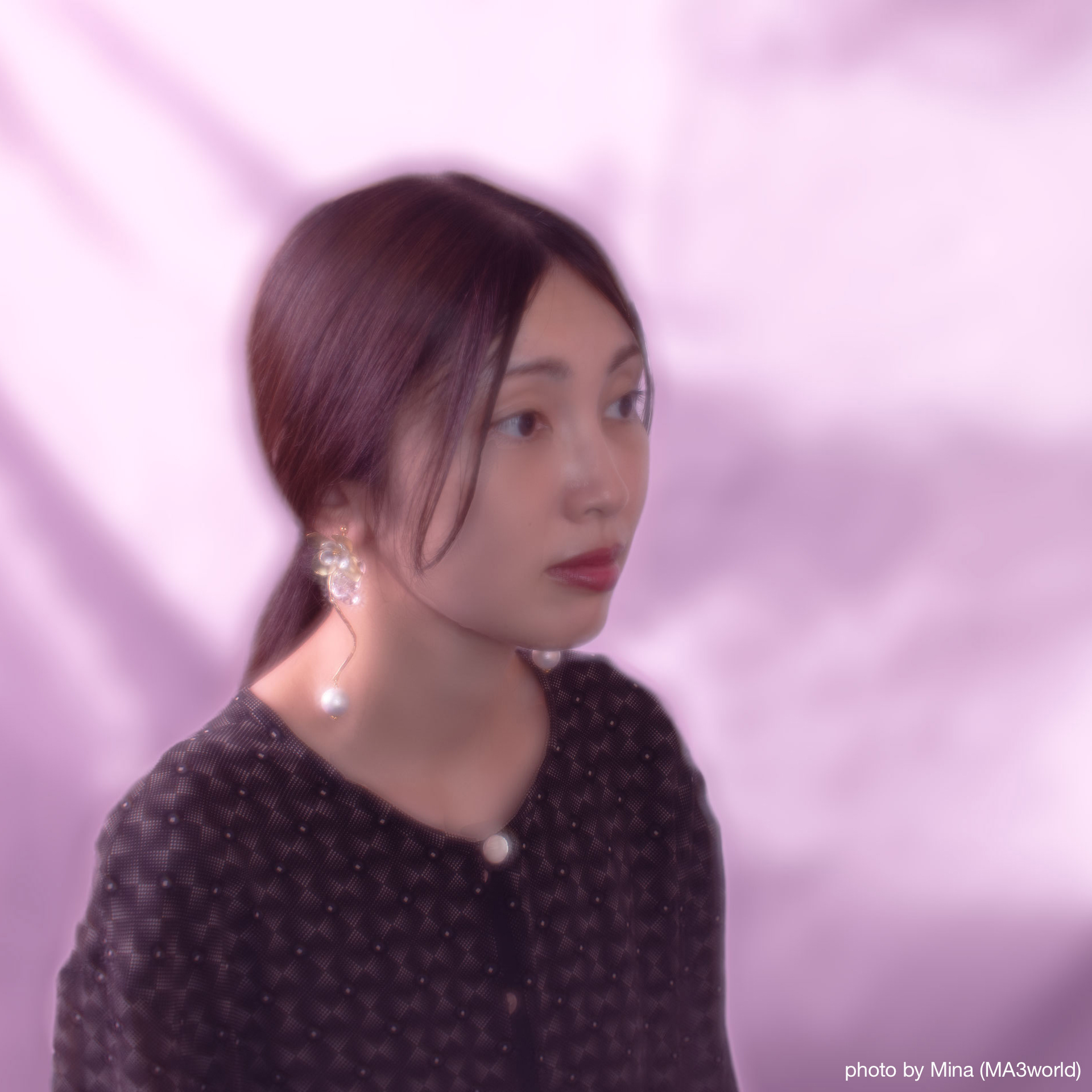
Saeko Ehara is a digital artist based in Tokyo whose practice explores memory, emotion, and our relationship with the world through digital technologies such as AI, generative art, and 3D scanning. Rooted in her lifelong fascination with Kirakira—a Japanese expression for moments of shimmering wonder—and flowers, her work seeks to reimagine how we perceive and connect with everyday experiences.
As a child, she was captivated by glittering anime trading cards, transparent stickers, acrylic accessories, and glass ornaments, collecting anything that caught and reflected light. She also spent countless hours reading flower encyclopedias, wearing out the first one she ever received. Growing up in Tokyo, nature was never an expansive wilderness but rather something encountered in fragments: flowers printed on the pages of books, blossoms in roadside planters, and the potted plants carefully tended by her mother.
For Ehara, Kirakira does not simply refer to glitter or physical light. It describes those fleeting moments when the ordinary suddenly feels transformed—when the world appears just slightly different and the heart is unexpectedly moved. Flowers, likewise, function not merely as botanical subjects but as vessels for memories, emotions, and pre-verbal sensations that exist somewhere between reality and imagination. They represent fragments of a deeply personal inner landscape that continues to reappear throughout her practice.
The motifs within her work—whether AI-generated imagery or data captured through 3D scanning—are not intended to faithfully reproduce their original subjects. Through digital translation, they acquire new contexts, carrying traces of memory, time, and personal experience as they emerge in altered forms. The act of transferring reality into digital space becomes not simply a means of preservation, but a process of transformation that reshapes our relationship with what we see and generates new ways of perceiving the world.
For Ehara, digital technology is not merely a production tool but a medium for rewriting the relationship between ourselves and our surroundings. AI, algorithms, and 3D scanning reconfigure reality, making visible both what is lost and what is newly created through the act of transformation. Her works update the sense of wonder and luminosity that first moved her in childhood through contemporary digital technologies, inviting viewers to rediscover their own moments of Kirakira and to encounter the familiar world with renewed perception.
江原彩子は、東京を拠点に活動するデジタルアーティストである。幼少期から心を惹かれてきた「キラキラ」と花を起点に、AIやジェネラティブアート、3Dスキャンなどのデジタル技術を用いて、記憶や感情、そして世界との新たな関わり方を探求している。
幼い頃の彼女は、お気に入りのアニメのキラキラカードや透明なシール、アクリルのアクセサリー、ガラスの小物など、光を受けて輝くものを集めることに夢中だった。同時に花の図鑑を眺めることも好きで、初めてもらった図鑑は擦り切れるまで読み返した。東京で育った彼女にとって、自然とは広大な風景ではなく、図鑑の中の花や街の植え込み、母が育てる鉢植えのような、人の手を介して出会う小さな断片として存在していた。
彼女にとって「キラキラ」とは、物質的な光そのものではなく、日常の中でふと心が揺さぶられ、世界がいつもとは少し違って見える瞬間を指している。花もまた、植物そのものというより、現実と空想のあわいで育まれた記憶や感情、まだ言葉になる前の感覚を映し出す存在である。それらは幼少期に形成された「自分だけの世界」の断片であり、現在の作品にも繰り返し現れる原風景となっている。
彼女の作品に登場するモチーフは、AIによって生成されたイメージであれ、現実を3Dスキャンしたデータであれ、その対象を忠実に再現することを目的としていない。デジタル化の過程を経ることで、それらは文脈を変え、記憶や時間、個人的な経験をまといながら、新たな存在として立ち上がる。現実をデジタルへと移し替える行為は、単なる保存ではなく、その対象との関係性を編み直し、新しい知覚を生み出す行為でもある。
彼女にとってデジタル技術は、単なる制作ツールではなく、世界との関係を編み直すための媒体である。AI、アルゴリズム、3Dスキャンによって現実は別の姿へと置き換えられ、その変換の過程で失われるものと新たに生まれるものが可視化される。彼女の作品は、幼少期に心を動かされた輝きや感覚を現在のデジタル技術によって更新し、鑑賞者にとってもまた、日常の中に新たな「キラキラ」や世界との出会い直しを生み出すことを試みている。